
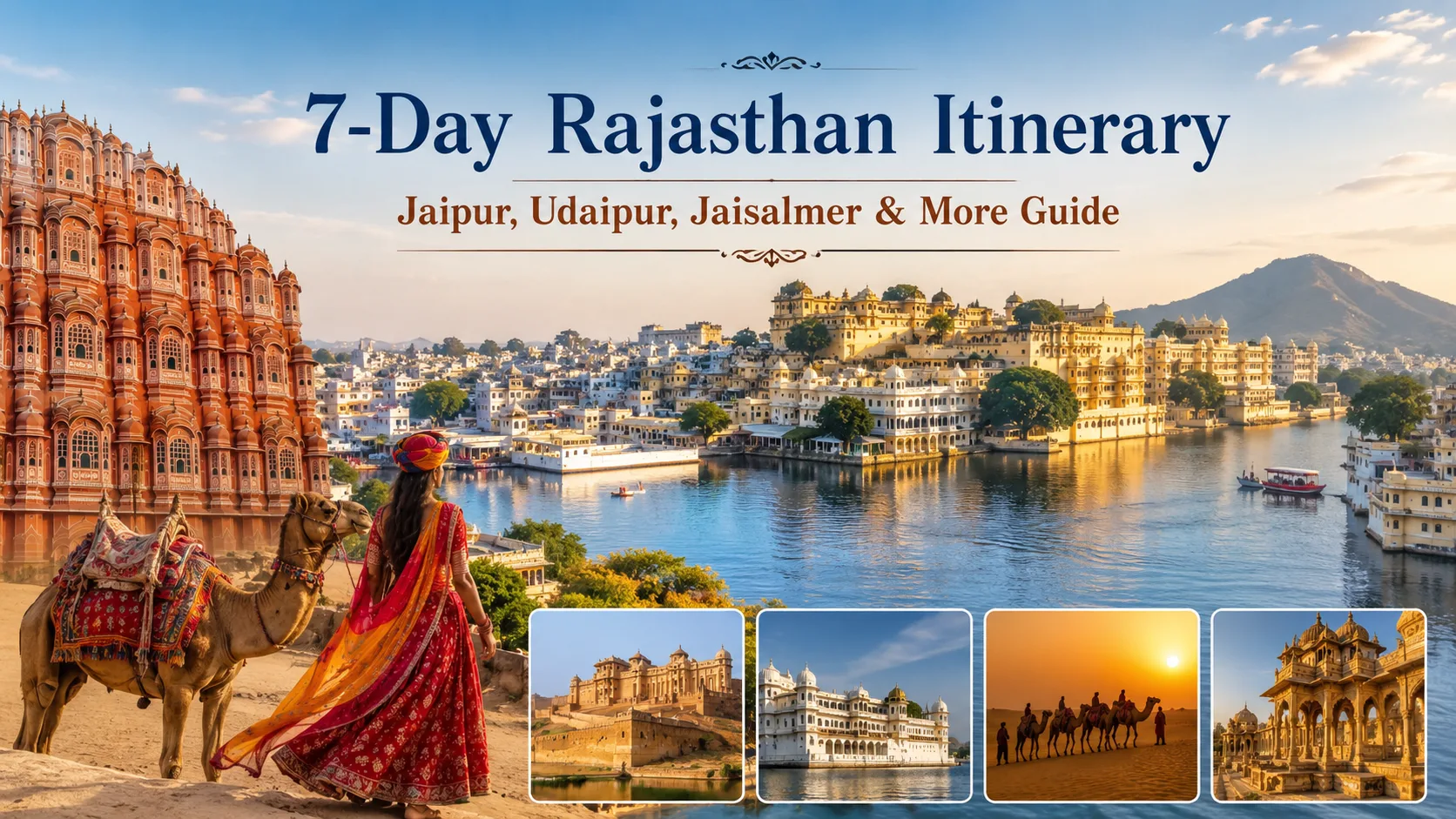
7-Day Rajasthan Itinerary: Must-See Cities & Towns
A week. That’s really all you need to get a proper feel for Rajasthan, provided you plan it right. This state doesn’t do things halfway – the forts are enormous, the lakes reflect entire palaces, and the desert stretches out further than you can photograph in one frame. If you’re working with seven days and want to hit the cities that actually define Rajasthan, here’s a 7 day Rajasthan itinerary built around that exact timeframe.
We’re covering Jaipur, Ajmer, Pushkar, Jodhpur, Jaisalmer, and Udaipur below – the six stops most people put at the top of their list, and for good reason. You’ll find a day-by-day breakdown, rough timings, food suggestions, and a budget estimate, so by the end of this guide you should have a workable plan whether you’re travelling as a family, planning a honeymoon, or backpacking on your own.
Why Choose a 7-Day Rajasthan Itinerary?
Seven days hits a particular sweet spot. It’s enough time to move between cities without treating your suitcase like a revolving door, yet short enough to fit into a week off work or an extended long weekend.
Here’s what a solid Rajasthan travel plan spread across seven days actually gets you:
- Royal architecture in both Jaipur and Udaipur
- The quieter, spiritual side of the state in Pushkar and Ajmer
- Genuine desert terrain around Jaisalmer and the Thar
- Jodhpur’s blue lanes and hilltop fort views
- Enough time to actually eat properly – not just grab something on the way to the next stop
Trying to squeeze the whole state into one week isn’t realistic, and most people who attempt it end up more tired than satisfied. This plan leans toward giving you enough time at each place rather than cramming in extra stops just to say you visited them.
Quick Overview of the 7-Day Rajasthan Itinerary
Before getting into the day-by-day details, here’s the route at a glance.
| Day | City/Town | Key Highlights | Overnight Stay |
| Day 1 | Jaipur | Amber Fort, City Palace, Hawa Mahal, Johari Bazaar | Jaipur |
| Day 2 | Ajmer & Pushkar | Ajmer Sharif Dargah, Pushkar Lake, Brahma Temple | Pushkar |
| Day 3 | Jodhpur | Mehrangarh Fort, Jaswant Thada, Clock Tower Market | Jodhpur |
| Day 4 | Jaisalmer | Jaisalmer Fort, Patwon Ki Haveli, Gadisar Lake | Jaisalmer |
| Day 5 | Jaisalmer Desert | Camel Safari, Jeep Safari, Sam Sand Dunes | Desert Camp |
| Day 6 | Udaipur | City Palace, Lake Pichola, Jag Mandir, Bagore Ki Haveli | Udaipur |
| Day 7 | Udaipur | Saheliyon Ki Bari, Vintage Car Museum, Departure | – |
Keep this table handy for reference, but there’s a lot more worth knowing about each stop, so let’s break it down day by day.
Day 1 – Explore Jaipur: The Pink City

Any decent Jaipur itinerary has to start early. The city’s terracotta-pink buildings and old-world bazaars pack in more than enough for a full day, and you’ll want daylight on your side.
Visit Amber Fort
About 11 kilometres outside the city, Amber Fort sits on a hilltop and tends to be the first stop for most visitors. Its Sheesh Mahal is the highlight – a hall covered in tiny mirror fragments that reportedly light up an entire room from a single candle flame. Get there before the tour groups do, ideally right after it opens.
Explore City Palace
Right in the middle of the old city, City Palace still functions partly as a royal residence even today. Wander through its courtyards, and you’ll come across museum sections displaying textiles, weaponry, and other artefacts tied to Jaipur’s ruling family.
See Hawa Mahal
Hawa Mahal – the Palace of Winds – is probably the single most recognisable building in Jaipur, if not all of Rajasthan. Its facade has 953 small latticed windows, originally designed so royal women could watch the streets below without being seen themselves. Catch it early morning from across the road, when the sandstone glows under the first light.
Shop at Johari Bazaar
Johari Bazaar is where Jaipur’s jewellery trade happens, and it’s worth a walk-through even if buying isn’t on your agenda. Beyond gemstones, you’ll find block-printed textiles and traditional bangles that give a good sense of local craftsmanship.
Try Authentic Rajasthani Food
Close out day one with a real Rajasthani thali. Dal baati churma, gatte ki sabzi, and ker sangri are worth trying here before you head further into the state, where menus start to vary town by town.
Day 2 – Jaipur to Ajmer & Pushkar
Day two involves roughly a 130-kilometre drive from Jaipur to the twin towns of Ajmer and Pushkar. They sit just 15 kilometres apart, which is why most itineraries pair them together.
Visit Ajmer Sharif Dargah
This is the shrine of Sufi saint Khwaja Moinuddin Chishti, and it draws pilgrims from every religious background, not just one. Even a brief stop here gives you a sense of why the town holds so much spiritual weight in India.
Explore Pushkar Lake
Considered sacred by Hindus, Pushkar Lake is ringed by more than 50 ghats where pilgrims come to bathe throughout the day. An evening walk along the ghats, once the lamps are lit, is one of the calmer moments you’ll have on this trip.
Visit Brahma Temple
Pushkar houses one of the very few temples in India dedicated entirely to Lord Brahma. Between the marble flooring and the silver coins embedded by devotees over the years, it’s worth a visit regardless of your own beliefs.
Sunset at Savitri Temple
For a wider view over the town, head up to Savitri Temple on the hill above Pushkar Lake – you can walk up or take the ropeway. Watching the sun go down over the desert from here is one of the more underrated parts of any Rajasthan sightseeing itinerary.
Day 3 – Jodhpur: The Blue City
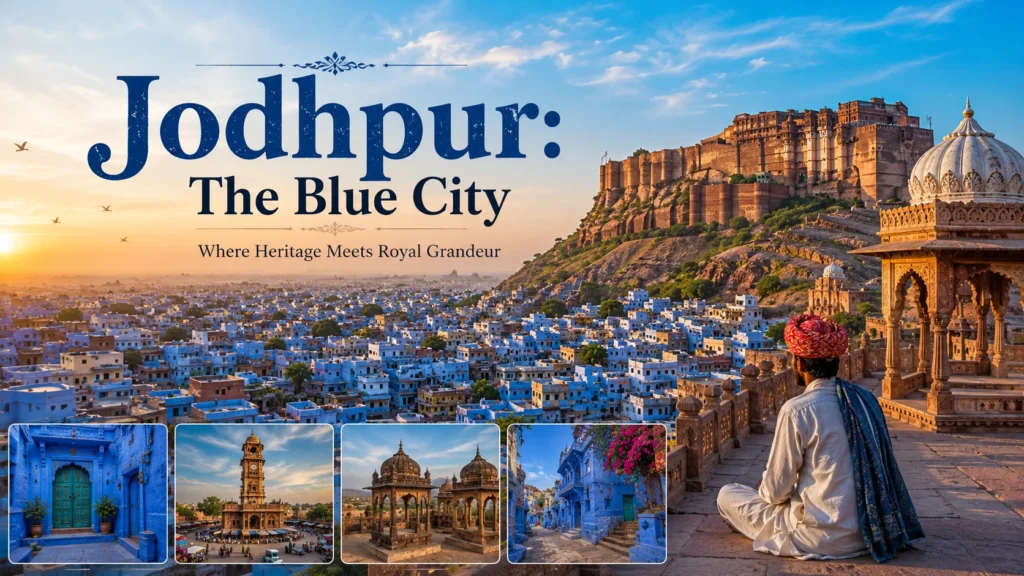
From Pushkar, expect around a 200-kilometre drive to Jodhpur, a city best known for its blue-washed houses and the fort that looms over the entire old town.
Mehrangarh Fort
Mehrangarh ranks among the largest and best-maintained forts in India, perched 400 feet above the city. Inside, the museum holds palanquins, weapons, and royal costumes, and the fort ramparts give you a clear view of the blue rooftops spread out below.
Jaswant Thada
Not far from the fort, Jaswant Thada is a white marble memorial built for Maharaja Jaswant Singh II. Its gardens and still pools offer a slower, quieter pace after the busier fort visit.
Clock Tower Market
Also known as Ghanta Ghar, this market is a good spot for spices, textiles, and handicrafts. It also happens to be one of the better places in the city to try mirchi bada and makhaniya lassi.
Blue City Walk
Set aside some unstructured time to just walk through the blue-painted lanes of old Jodhpur. There’s no checklist for this part – it’s more about soaking in the atmosphere and talking to shopkeepers along the way.
Day 4 – Jaisalmer: The Golden City
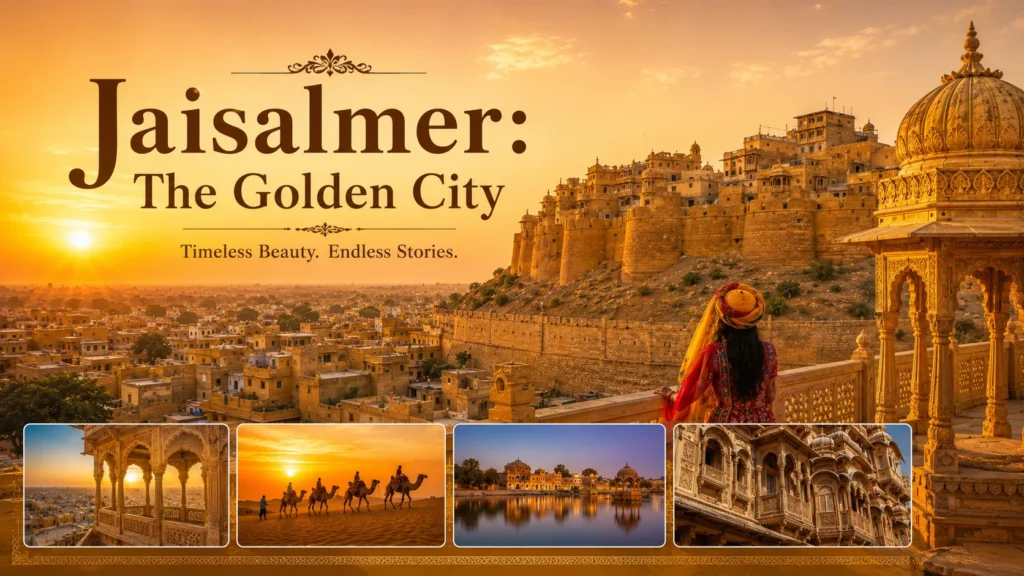
The drive from Jodhpur to Jaisalmer runs about 280 kilometres, taking you deeper into the Thar Desert. Jaisalmer’s sandstone buildings give it a golden tint that’s earned the city its nickname.
Explore Jaisalmer Fort
Jaisalmer Fort is unusual in that it’s still inhabited – people live and run shops inside its walls, unlike most forts in the state. Built from yellow sandstone, it takes on a golden glow at sunset, which is exactly how it got the name “Golden Fort.”
Patwon Ki Haveli
A cluster of five havelis known for elaborate stone carvings and mirror work, Patwon Ki Haveli offers a good look at how wealthy merchant families lived generations ago.
Gadisar Lake
Originally built as a water reservoir, Gadisar Lake is now surrounded by small temples and shrines. A boat ride here, early morning or late evening, makes for a relaxed hour away from the busier fort area.
Local Markets
Jaisalmer’s markets specialise in leather goods, mirror-work textiles, and antiques. Bargaining is standard practice, so treat the first quoted price as a starting point rather than the final one.
Day 5 – Desert Adventure in Jaisalmer
Day five is where the Thar Desert takes centre stage – one of the main reasons Jaisalmer makes it onto most Rajasthan road trip itinerary plans in the first place.
Camel Safari
A camel safari across the dunes is the classic desert experience, usually lasting one to two hours. Late afternoon works best, once the heat starts to ease off.
Jeep Safari
If a camel ride isn’t your thing, a jeep safari covers more ground faster and suits travellers on a tighter schedule.
Sam Sand Dunes
Roughly 40 kilometres from Jaisalmer city, Sam Sand Dunes is the go-to spot for watching the sunset over open desert. The sand shifts through several colours as the light fades, and it’s worth the drive out just for that.
Cultural Dance Performance
Most desert camps arrange an evening of folk music and dance, including the Kalbelia dance – recognised by UNESCO as part of India’s intangible cultural heritage.
Overnight Desert Camp
Sleeping under a clear desert sky, far from any city lights, tends to be one of the trip’s more memorable nights. Camps range from basic to semi-luxury, most with attached bathrooms, so comfort isn’t much of a trade-off.
Day 6 – Udaipur: The City of Lakes
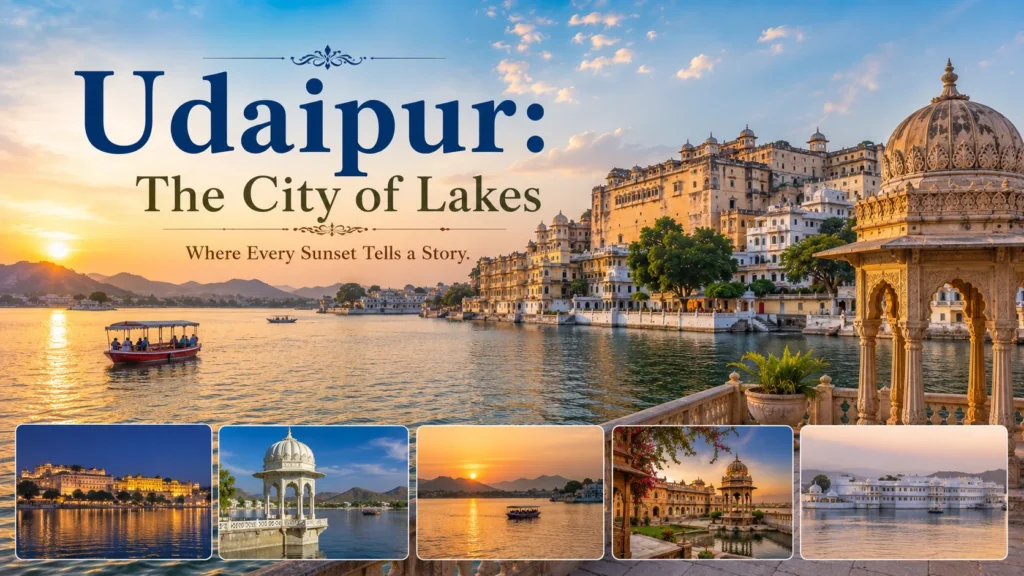
From Jaisalmer, it’s about a 300-kilometre drive to Udaipur – often called Rajasthan’s most romantic city, largely thanks to its lakes and palaces.
City Palace
Udaipur’s City Palace runs directly along Lake Pichola and is actually a complex of several palaces, built over nearly 400 years by different rulers. Its balconies and towers offer some of the best views anywhere in the city.
Lake Pichola Boat Ride
A boat ride on Lake Pichola, timed around sunset, gets you close-up views of the City Palace, Jag Mandir, and the Aravalli hills in the background.
Jag Mandir
Jag Mandir sits on its own island in the middle of Lake Pichola. It once sheltered a young Mughal prince and today doubles as a heritage restaurant and event venue.
Bagore Ki Haveli
Built in the 18th century on Gangori Ghat, this haveli is now a museum covering Mewar’s royal lifestyle and artefacts. It also hosts an evening folk dance show that draws a steady crowd of visitors.
Sunset at Fateh Sagar Lake
Fateh Sagar Lake sees fewer crowds than Pichola and makes for a quieter evening walk or short boat ride, with the hills forming a scenic backdrop.
Day 7 – Udaipur Sightseeing & Departure
Your last day can be used for a few final stops in Udaipur, depending on when your flight or train is scheduled.
Saheliyon Ki Bari
Translating to “Garden of the Maidens,” this garden was built for the ladies of the royal court. Fountains, marble elephants, and a lotus pool make it an easy, low-effort visit for the morning of your departure day.
Vintage Car Museum
Udaipur’s Vintage Car Museum holds a small but interesting collection of classic cars once owned by the royal family, some of which have appeared in films. It doesn’t take more than an hour to see properly.
Local Shopping
Udaipur is known for miniature paintings, silver jewellery, and Pichwai art. The lanes around Hathi Pol and Bada Bazaar are good for last-minute souvenirs.
Best Cafes Before Departure
Several rooftop cafes near Lake Pichola offer direct views of the City Palace, making them a relaxed way to spend your final hours before heading out.
Suggested Rajasthan Itinerary Map
Here’s the general route this plan follows:
Jaipur → Ajmer/Pushkar → Jodhpur → Jaisalmer → Udaipur
This traces a loop across western and southern Rajasthan, covering somewhere around 900 to 950 kilometres by road over the full week. If you’re driving yourself, road conditions between cities are generally decent, but the stretches connecting Jodhpur, Jaisalmer, and Udaipur are long – budget 5 to 7 hours of driving on those particular days.
Best Time to Visit Rajasthan
Timing matters more in Rajasthan than in most places, given how extreme the climate swings can get.
Winter (October–March)
This is, without much debate, the best time to visit Rajasthan. Daytime temperatures sit comfortably between 10°C and 25°C, which suits fort climbing, walking tours, and desert camping alike. Nights in Jaisalmer can turn quite cold during December and January, so pack accordingly.
Summer (April–June)
Summer temperatures regularly cross 40°C, especially around Jaisalmer and Bikaner, making outdoor sightseeing genuinely uncomfortable. On the plus side, hotel rates and travel costs tend to drop noticeably during this stretch if budget matters more than comfort.
Monsoon (July–September)
Monsoon brings some relief from the heat and turns the landscape near the Aravalli hills and Mount Abu noticeably greener. Rainfall stays moderate for the most part, though the occasional heavy shower can disrupt outdoor plans.
Rajasthan Travel Budget for 7 Days
Costs shift depending on travel style, but here’s a rough range to work with:
- Budget travellers: ₹15,000–₹25,000 per person – basic guesthouses, local transport, street food
- Mid-range travellers: ₹30,000–₹50,000 per person – 3-star hotels, private car travel, a mix of local and restaurant meals
- Luxury travellers: ₹60,000 and above – heritage hotels, private guides, premium desert camps
A few things drive up costs quickly: private car hire between cities, entry fees at forts and palaces (which add up fast across six destinations), and desert camp packages in Jaisalmer, typically priced above regular hotel stays because of the activities and meals bundled in.
Rajasthan Travel Tips
Some practical points that tend to make this trip go smoother:
- Book a private car or driver for travel between cities – with this many stops, it saves real time compared to relying on buses
- Keep smaller cash denominations on hand, since many local markets and smaller eateries still don’t take cards
- Dress comfortably but keep shoulders and knees covered when visiting temples or dargahs
- Stay on top of hydration, particularly if you’re travelling between March and June
- Carry a printed or downloaded copy of hotel bookings and ID, since some heritage properties still ask for physical verification
- Bargain at markets, especially in Jaisalmer and Jodhpur, where quoted prices usually start higher than expected
- Start fort and palace visits early to beat both the crowds and the heat
Other Amazing Places to Visit in Rajasthan

If a future trip allows more time, or you’d like to tweak this route, a few other places worth considering:
Mount Abu – Rajasthan’s only hill station, home to the Dilwara Jain Temples and Nakki Lake, with a noticeably cooler climate than the rest of the state.
Bikaner – Anchored by Junagarh Fort and the unusual Karni Mata Temple, also called the “Rat Temple,” Bikaner offers a quieter, less touristy pace.
Chittorgarh – Chittorgarh Fort is among the largest in India and carries heavy historical weight, tied closely to stories of Rajput valour and sacrifice.
Bundi – Known for its stepwells and blue-tinted houses, Bundi often gets described as a smaller, quieter version of Jodhpur.
Kumbhalgarh – Home to the second-longest continuous wall in the world after the Great Wall of China, Kumbhalgarh Fort is a strong pick for anyone drawn to history.
Ranthambore National Park – One of India’s better spots for wild tiger sightings, Ranthambore pairs well with this itinerary if wildlife interests you as much as architecture.
Udaipur, Jaisalmer, and Jodhpur already feature in this plan, but each one has enough depth to justify an extra day if your schedule has room for it.
Conclusion
A week is enough time to understand why Rajasthan gets called the cultural heart of India so often. From Jaipur’s pink walls to Jaisalmer’s golden dunes and Udaipur’s blue lakes, this 7 day Rajasthan itinerary covers the state’s defining experiences without leaving you drained by day seven.
If handling the driving distances, hotel bookings, and local logistics yourself sounds like more effort than you’d like, A1 Classic Travels can put together a similar route with private car rentals, verified stays, and local support throughout – so the planning stays off your plate and the trip stays the focus.
Frequently Asked Questions
Yes, seven days comfortably covers Jaipur, Pushkar, Jodhpur, Jaisalmer, and Udaipur. You won’t see the whole state, but you’ll get through its most iconic forts, lakes, and desert stretches without feeling rushed.
October through March works best, with daytime temperatures staying comfortable for sightseeing. Summers turn extremely hot, while monsoon season offers a cooler, greener alternative for those who prefer shorter visits.
Costs typically range from ₹15,000 for budget travel up to ₹60,000 or more per person for a luxury experience, depending on hotel category, private transport choices, and extras like desert camping.
For a multi-city plan like this one, private car travel usually beats trains on convenience, since it offers flexibility in timing and reaches smaller towns like Pushkar that aren’t always well served by rail.
Most first-timers prioritise Jaipur, Jodhpur, Jaisalmer, and Udaipur, since these four cities hold the bulk of Rajasthan’s well-known forts, palaces, and lakes.
Yes, though it helps to build in a little extra rest time between destinations, particularly for young children or elderly travellers, given how long some of the driving stretches run.
Rajasthan is generally regarded as safe for tourists, including those travelling solo. Standard precautions – avoiding isolated areas after dark, staying aware of surroundings – apply here just as they would in any tourist destination.
Latest Post
- Things to Do in Jaisalmer: The Complete Golden City Travel Guide
- Jaipur to Ranthambore Distance – Route, Travel Time, Taxi Fare & Complete Travel Guide
- Jaipur to Udaipur Tour Package: 3 Days vs 5 Days – Which One Should You Choose?
- Rajasthan Tour Packages from Pune: Complete Travel Guide
- Jaipur to Jodhpur Distance by Road: Best Route, Travel Time & Car Rental Guide


